Years ago, someone I had met earlier that day offered to send me Reiki remotely. Later that evening, at the agreed time, I felt a distinct wave of warmth move through my body.
I could not explain it. I still cannot.
That experience did not settle a scientific question or prove the existence of a transferable energy field. It did something more useful for me: it left a question open, and it made me curious enough to keep exploring.
Allowing the question to remain open
When my interest in Reiki returned years later, I found two very different worlds. One presented Reiki as an answer to almost everything. The other dismissed every experience associated with it as nonsense or placebo.
I do not feel at home in either certainty. I chose to learn the practice while keeping curiosity, critical thinking and humility in the room.
That position is central to the way I speak about Reiki today. I can describe what I do, what I feel and what some people report after a session. I cannot honestly claim that Reiki cures illness, directs a scientifically established energy or produces a predictable medical result.
What Reiki is, and what it is not
Reiki is generally practised with the hands resting lightly on or held just above the body, with the intention of supporting relaxation and wellbeing. Some Reiki traditions describe this as channeling universal life energy.
Current scientific evidence has not established the existence of that proposed energy field, and the clinical evidence for Reiki remains limited and mixed. Some studies report improvements in outcomes such as pain, anxiety or quality of life, while reviews repeatedly point to small samples, inconsistent methods and the difficulty of separating a specific Reiki effect from attention, expectation, rest and human contact.
For me, that uncertainty does not make the encounter meaningless. It defines the boundary of the claim.
Reiki is a complementary practice. It is not a diagnosis, a replacement for medical or psychological care, or a reason to delay treatment.
Presence before explanation
What continues to move me is the quality of attention the practice requires. I slow down. I listen with my hands, my posture, my breath and my intuition. I am not trying to perform a result.
People sometimes describe warmth, heaviness, tingling, emotional release, calm or sleepiness. Others feel very little. Every response is valid. The session is not a test of belief, and the absence of a dramatic sensation is not a failure.
This respect for another person’s experience is more important to me than defending a theory.
Consent, boundaries and care
Touch, even gentle touch, is never neutral. I ask permission, explain what I am doing and remain attentive to comfort, boundaries and the option to stop. Hands can remain above the body when contact is not wanted.
I also avoid language that places responsibility on the recipient, for example, suggesting that a session “failed” because someone was closed, negative or insufficiently receptive. Compassion without consent or humility is not compassion.
What Reiki teaches me as an actor
Reiki and acting may appear unrelated, but they share a demand I value deeply: presence without forcing.
In a scene, I cannot truly listen if I am busy demonstrating that I am listening. In Reiki, I cannot offer calm attention if I am obsessed with proving that something extraordinary is happening.
Both practices ask me to notice subtle changes, tolerate silence and allow another person’s experience to remain their own. They also expose the ego’s desire to be impressive, useful or certain.
Contributing in a modest way
I practise Reiki because creating a quiet space for another human being can matter. Focused attention, rest and compassionate presence have value even when the mechanism remains uncertain.
I do not need to turn mystery into marketing. I can remain open, responsible and careful about what I claim.
Reiki has not given me all the answers. It has made me more attentive to the quality of the questions, and to how I show up while someone else is searching for their own.
More from this Why I series
-
Why I Learn Russian: Expanding My Range, One Cyrillic Letter at a Time
I have always been attracted to disciplines that make me a beginner again. Russian does that very efficiently.…
-

Why I Practice Heart Coherence: Finding My Center Before the Work Begins
For several years, I have been building and refining what I call my Daily Morning Ritual. Nothing mystical…
-

Why I Fast: Flexibility Inside a 16:8 Rhythm
I fast intermittently not because I enjoy being hungry, and not because I think I have discovered a…
-
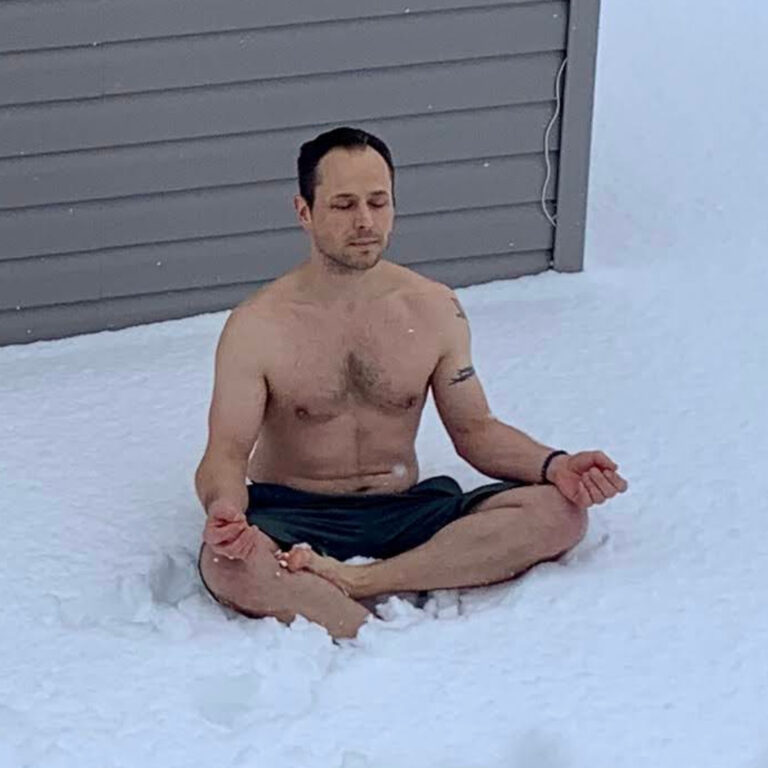
Why I Meditate: Finding Stillness in an Actor’s Whirlwind
As an actor, my mind is part of my instrument. It remembers the lines, constructs imaginary circumstances, anticipates…
Further reading and exploration
- NCCIH, Reiki, a concise evidence-based overview of the practice, its proposed mechanism and the limits of current evidence.
- Cleveland Clinic, What Is Reiki? And Does It Actually Work?, an accessible clinical perspective that treats Reiki as complementary rather than a replacement for conventional care.
- Cancer Research UK, Reiki, useful guidance on Reiki in a healthcare context and on keeping claims in proportion.
- Systematic Reviews / PubMed, 2025 meta-analysis of Reiki and quality of life, a recent look at randomized trials, useful both for its findings and for understanding the limitations of the evidence base.
- International Center for Reiki Training, About the ICRT, a perspective from within the Reiki tradition on its history, teaching and contemporary practice.