For several years, I have been building and refining what I call my Daily Morning Ritual. Nothing mystical and nothing particularly glamorous: a few practices that help me begin the day deliberately rather than being immediately pulled into reaction.
Heart coherence has become one of the quietest parts of that ritual and one of the most useful. As an actor, I often need to be emotionally open and technically precise at the same time. I have to access feeling without drowning in it, listen while remembering lines, and remain spontaneous inside marks, lenses and continuity. Slow, paced breathing gives me a simple place to begin.
What I mean by heart coherence
The term heart coherence is used in several ways. At its most practical, I use it to describe the more regular pattern that can emerge between breathing, heart rhythm and the nervous system during slow paced breathing.
When breathing slows to roughly five or six cycles per minute, heart rate tends to rise slightly during inhalation and fall during exhalation. That normal interaction is part of respiratory sinus arrhythmia and can be observed through heart rate variability, or HRV. Around an individual’s resonance frequency, those oscillations can become especially pronounced and regular.
I do not need to imagine that my heart has become perfectly ordered or that one breathing pattern will solve every problem. I use the term because it describes a felt experience: after a few minutes of regular breathing, I often feel less scattered and more internally coordinated.
Research on slow paced and resonance breathing supports meaningful short-term physiological effects and suggests possible benefits for stress regulation and some aspects of cognitive performance. It does not justify every claim made in the wellness world. That distinction matters to me. A practice can be valuable without being turned into a miracle.
My ten-minute practice
I begin with a simple five-minute cycle: inhale gently through the nose for five seconds, then exhale for five seconds. The breath is comfortable rather than heroic. If I feel that I am pulling air in or forcing it out, I soften the effort.
I then sometimes move into a personal variation inspired years ago by the late Eric L. Knouse: a five-second inhalation followed by a longer exhalation accompanied by sound. I vocalize an open “Ooooooh” and let it close gradually into a hum. On some days I add gentle pelvic-floor engagement near the end of the exhale.
This second cycle is not a universal heart-coherence protocol. It is my adaptation, one that connects breath, resonance and physical awareness in a way that works for me. If the longer exhalation causes strain, air hunger or dizziness, I return to normal breathing. The point is regulation, not endurance.
Why sound matters to me
An actor works with vibration whether or not there is a microphone in the room. Voice is breath made audible. Humming lets me feel that connection directly: jaw, lips, chest, face, pelvic floor and breath become parts of one action.
This matters because tension is rarely isolated. Anxiety about an audition can tighten the throat; an effort to sound confident can lock the breath; concentration can harden the face. A few minutes of sound and slow exhalation help me notice these patterns before I bring them into the work.
A metronome instead of another screen
One piece of the original article I still use is wonderfully simple: a metronome. I often use the Soundbrenner metronome app as an auditory cue so I do not have to stare at a breathing animation. Once the rhythm is established, the tool can disappear into the background and I can pay attention to sensation rather than the screen.
Before an audition, on set and after the work
Before an audition, I use slow breathing to make room for nervous energy without trying to erase it. Nervousness is not the enemy. It can bring alertness, urgency and life to a scene. The problem begins when it narrows my attention so much that I stop listening.
On set, a few discreet cycles can help during resets or long waits. No one needs to know I am practising anything. I simply slow the breath and reconnect with the physical circumstances of the scene.
After emotionally demanding work, the same practice can help me transition out. Actors learn to enter imagined circumstances; we also need ways to leave them without pretending that the nervous system has an on-off switch.
A simple way to try it
Sit comfortably and breathe normally for a moment. Then inhale gently for five seconds and exhale for five seconds. Continue for a few minutes without forcing depth. A visual pacer or a quiet metronome can help, but the tool should disappear into the practice rather than becoming another screen to manage.
Five seconds is not sacred. Resonance frequency varies from person to person, and people with respiratory, cardiovascular or anxiety-related concerns may need a different pace or professional guidance. The useful rhythm is one that produces steadiness without discomfort.
Keeping the claims in proportion
Heart coherence is not a medical treatment, a diagnostic tool or a guarantee of emotional control. It is a breathing practice I use to support attention, self-regulation and readiness.
I value it precisely because it is modest. It asks for no special identity and no dramatic performance. It gives me ten minutes to listen to the instrument before asking it to perform.
More from this Why I series
-
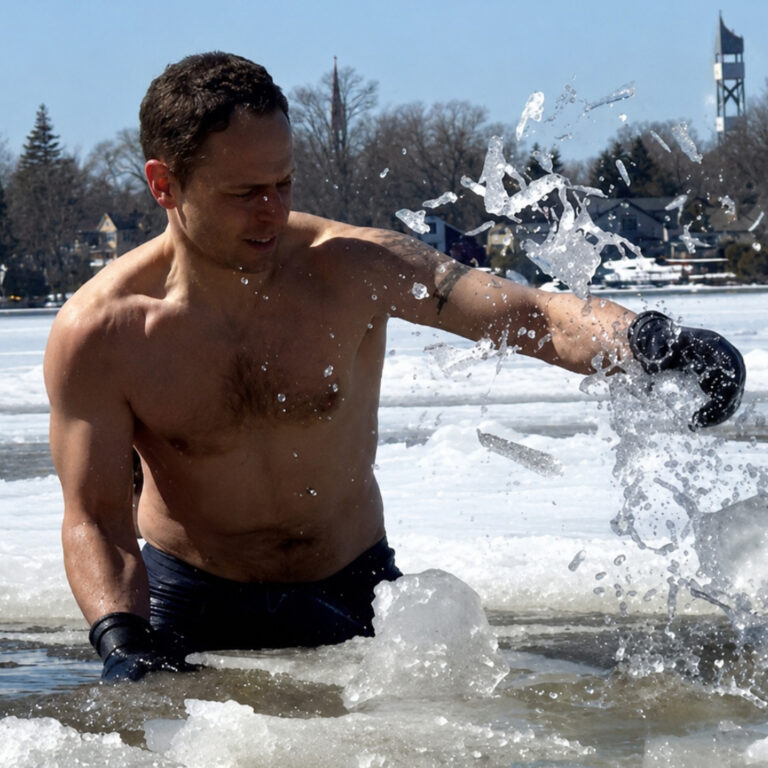
Why I Take Ice Baths: Choosing Discomfort with Respect
Stepping into cold water is still uncomfortable. If it ever becomes completely ordinary, I will probably have to…
-

Why I Practice Heart Coherence: Finding My Center Before the Work Begins
For several years, I have been building and refining what I call my Daily Morning Ritual. Nothing mystical…
-

Why I Have a Daily Morning Routine: A Mind-Body Tune-Up for an Actor’s Life
As an actor, my instrument is my whole self, body, mind, attention and whatever emotional weather happens to…
-

Why I Practice Reiki: Presence, Compassion and an Open Question
Years ago, someone I had met earlier that day offered to send me Reiki remotely. Later that evening,…
Further reading and listening
- Rich Roll Podcast, Manoj Dias on mindfulness, performance and coherent breathing. Includes a guided coherent-breathing practice and a broader conversation about carrying awareness into daily life.
- HeartMath Institute, Quick Coherence Technique for Adults. One of the clearest introductions to HeartMath’s own approach to the practice.
- Neuroscience & Biobehavioral Reviews / PubMed, Heart rate variability and slow-paced breathing. A scientific review connecting coherence, resonance breathing, HRV and baroreflex physiology.
- Frontiers in Human Neuroscience / PMC, The physiological effects of slow breathing in healthy humans. A broader review of the respiratory, cardiovascular and nervous-system effects of slow breathing.
- HeartMath Institute, Science of coherence. Useful for understanding how HeartMath itself defines and measures physiological coherence.