I have always been attracted to disciplines that make me a beginner again. Russian does that very efficiently.
The alphabet changes, the sounds resist familiar habits, grammar reorganizes the sentence and even a small success has to be earned. I do not pretend to be fluent. I am learning, and the distance between those two statements is exactly where the work becomes interesting.
A language that asks me to listen differently
Russian first caught my attention through its sound: weight and softness, consonant clusters, palatalized consonants, unexpected stress and a musicality that does not behave like French or English.
For an actor, learning to hear those distinctions is valuable even before fluent speech becomes possible. Accent work begins with listening. If I cannot perceive a sound accurately, I cannot reproduce it truthfully. Russian obliges me to slow down and hear what I would otherwise flatten into something familiar.
The humility of Cyrillic
Learning Cyrillic is not the most difficult part of Russian, but it is the first useful shock. Letters that resemble familiar Latin characters can represent different sounds. The eye makes confident assumptions and the mouth pays the price.
That experience is wonderfully humbling. It reminds me that certainty is not the same as accuracy. In acting, I can make the same mistake with a scene: decide too quickly what it means, then spend the rest of rehearsal protecting my first interpretation.
Memory, attention and the brain
Learning vocabulary, cases and unfamiliar sound patterns certainly exercises memory and attention. Research also shows that adult second-language learning can be accompanied by functional and structural changes in the brain.
That does not mean studying Russian automatically makes me more intelligent or protects me from cognitive decline. Research on broad cognitive advantages from language learning and bilingualism remains mixed. Some studies find improvements in particular tasks or forms of memory; others find little transfer beyond the language work itself.
I prefer the honest claim: Russian gives my brain demanding, varied work. It makes me retrieve, compare, inhibit the obvious answer, tolerate mistakes and try again. Whatever the long-term cognitive effect may be, the learning itself is alive.
A bridge into another culture
A language is never only a code. It carries humour, history, social habits, contradictions and ways of organizing experience. Translation can open the door, but it does not reproduce the room.
Learning Russian gives me a more direct relationship with literature, music, cinema and the voices of people who inhabit the language. It also complicates easy cultural assumptions. The more I learn, the less comfortable I become speaking about a vast culture as though it were one simple thing.
For an actor, that complication is useful. Characters become thin when I reduce them to nationality, accent or stereotype. Language study pushes me toward specificity.
The actor’s laboratory
Russian offers practical training for my craft:
- Pronunciation develops attention to the tongue, lips, palate and breath.
- Listening strengthens my ability to catch rhythm, intention and emotional colour before I understand every word.
- Memorization requires sound, image, movement and repetition to work together.
- Mistakes reduce vanity. I have to speak before I feel fully ready.
- New texts and performances broaden the references available to my imagination.
One day, this work may support a Russian-speaking role. Even if it never does, the process already affects the way I listen and learn.
The “becoming a better human” connection
In the original version of this article, I connected learning Russian to a larger personal project I sometimes describe as “becoming a better human.” I still like that idea, as long as “better” does not mean more impressive.
For me it means becoming more curious, less certain of my first assumptions, more willing to be corrected and more capable of encountering another person on their own terms. Learning a language is a very concrete way to practise all four.
How I keep going
I work best through regular contact rather than occasional heroic sessions. Reading aloud, listening repeatedly, shadowing short phrases, writing by hand and returning to vocabulary in context all help.
I also try to accept an uncomfortable truth: comprehension grows unevenly. I may understand a written sentence and miss it completely when spoken. I may recognize a word ten times and fail to retrieve it when needed. Frustration is not evidence that nothing is happening.
It is the feeling of old habits being asked to reorganize.
Expanding my range
Learning Russian fits into a larger personal project: becoming more curious, more adaptable and less confined by what I already know how to do.
Every new language reveals both another world and the limits of my current one. That is reason enough to continue, one sound, one case and one Cyrillic letter at a time.
My Russian-language acting demo
Learning Russian is not only an intellectual exercise for me; I also want the language to live in performance. This acting demo is one practical expression of that work.
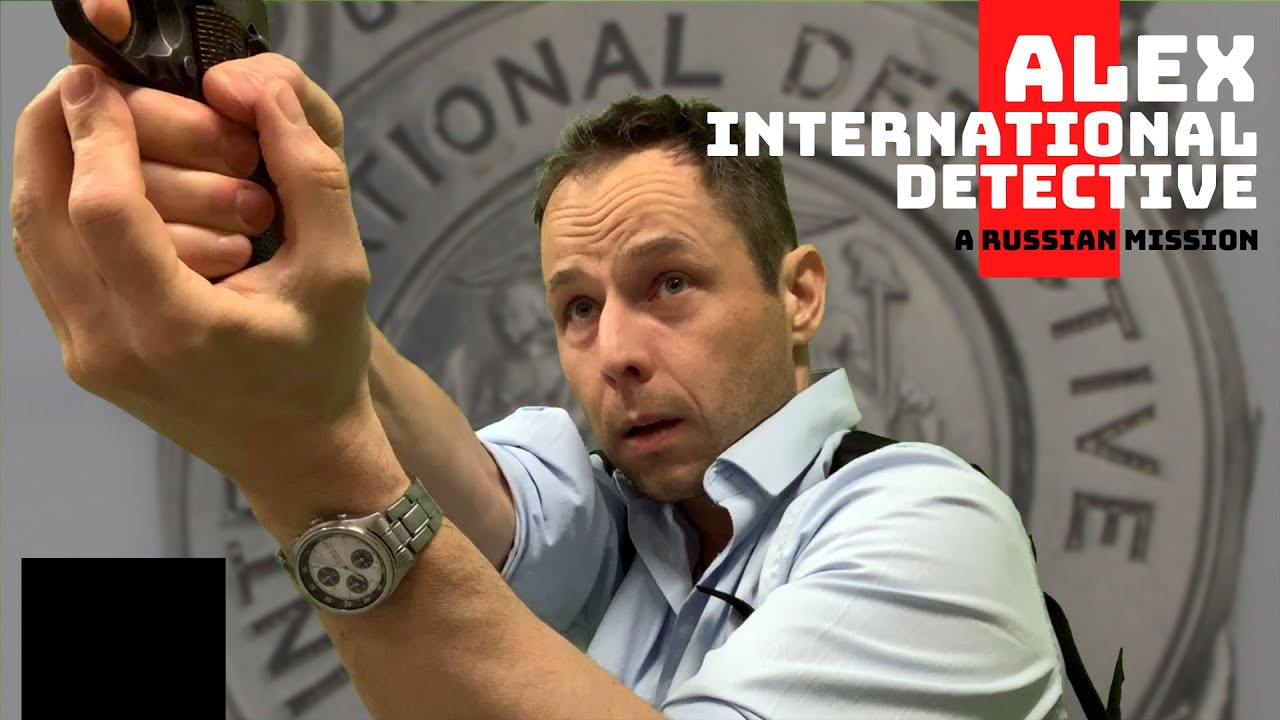
Watch my Russian-language acting demo on YouTube.
More from this Why I series
-

Why I Learn Russian: Expanding My Range, One Cyrillic Letter at a Time
I have always been attracted to disciplines that make me a beginner again. Russian does that very efficiently.…
-

Why I Practice Heart Coherence: Finding My Center Before the Work Begins
For several years, I have been building and refining what I call my Daily Morning Ritual. Nothing mystical…
-

Why I Take Ice Baths: Choosing Discomfort with Respect
Stepping into cold water is still uncomfortable. If it ever becomes completely ordinary, I will probably have to…
-

Why I Fast: Flexibility Inside a 16:8 Rhythm
I fast intermittently not because I enjoy being hungry, and not because I think I have discovered a…
Further reading and exploration
- Russian With Max, comprehensible Russian, podcasts and lessons built around listening to real language in context.
- University of Texas, Russian Online, a substantial free university resource for grammar, pronunciation and structured study.
- Между нами (Mezhdu Nami), a free web-based first-year Russian textbook with audio, vocabulary, grammar and cultural context.
- Real Russian Club, lessons, podcasts and listening practice from a teacher of Russian as a foreign language.
- Frontiers in Human Neuroscience, 2026 review of neuroplasticity in adult second-language learning, useful context for the brain-related claims without turning language learning into a miracle cognitive supplement.