Actor’s Guide
Article 1. Where do you start as an actor in Canada?
What changes when you’re starting out as an actor in Canada? Drawing on my own path in Montréal, I suggest a few ways into the work.
Maybe you feel it too. The pull of a set, a good script, the chance to be somebody else for a while. Then comes a more down-to-earth question. If you live in Canada and you want to act, where do you start?
Talent travels. Getting started happens somewhere in particular.
Why start close to home?
An actor in Los Angeles might give you terrific advice about a scene and leave you no closer to answering a casting notice in Montréal. Even within Canada, opportunities vary by city, language and kind of production. French-language theatre, an English-language series and a dubbing studio can all be working in the same city. Who you approach and what working conditions apply can change from one project to the next.
When you read a casting notice, start with three simple questions. What are they making? In what language? Where would I need to be available?
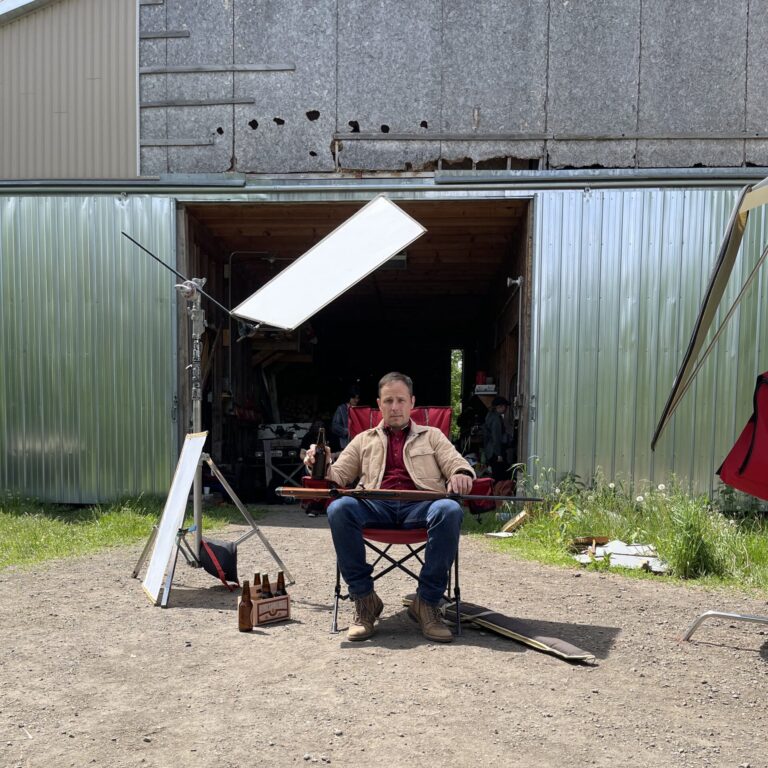
I spent a long time looking for my own bearings. After putting my career in aviation on hold, I joined the Canadian Forces as an officer cadet. I thought I was chasing a dream. I soon realized I was committing myself to a life that didn’t feel like mine. I left that structured world for a profession where the next step was a lot less obvious. That’s where this guide comes from. I wanted to share what I would have liked to read when I was starting out.
Finding your first way into the work
Before paying for headshots, a reel or several subscriptions, I would start by finding a real opportunity to act. A trial class, a workshop or a scene worked on with someone else can help you figure out what draws you in and what you need to learn. Read a few casting notices in your area, even if you are not ready to submit: what roles are available, in which languages, with what availability and materials required? Those give you concrete needs to consider when choosing your next step.
- What parts would you love to read for? That’s one way to start exploring your casting type.
- Which scene lets someone see what you can do? That’s the first decision to make when you put together a demo reel.
- Where are the projects you’re interested in posted? Start with these casting platforms used in Canada.
- How do you manage the business side of acting and still make time to act with other people?
- Where could you make a first attempt? A class, community theatre or a student project are possibilities to explore. Before committing, ask about supervision, working conditions and how your performance will be used.
Who is the guide for?
- Actors who are just beginning and sometimes feel a little alone.
- Actors with experience who want to bring more structure to their career.
- Artists who want to build something sustainable, not simply book the next role.
Giving yourself permission
One thing my own path has taught me is that I could spend a very long time waiting to be discovered in a café. Nobody’s coming to give me permission to be an actor. You can ask someone to read with you, work on a scene or find out more about an audition near you.
Getting together with someone to rehearse a scene is already acting.
Talent matters. So do curiosity, independence and the relationships we build with other artists. Those are things we can work on long before a role comes along.
Which performers’ union should you approach?
In Montréal, two shoots on the same block can fall under different agreements. Look for the production name, working language and agreement in the casting notice. If the agreement is missing, ask the producer which one applies. The union involved can then help you understand the working conditions.
- Union des artistes (UDA). In Quebec, the UDA represents performers in areas including theatre, screen work and dubbing. The language of a production and its intended audience matter. Quebec’s labour tribunal lists the areas of recognition (in French).
- ACTRA. For an English-language shoot in Quebec, ACTRA Montreal is a good starting point. For live performance, the Canadian Actors’ Equity Association represents artists working in areas including theatre, opera and dance in Canada. Read about the roles of Equity and the UDA in theatre.
Where can you start today?
This week, choose a scene, find someone to read it with or look into a class whose approach interests you. These are suggestions, not requirements. Even reading a scene with a friend at the kitchen table can tell you which part you would like to play again tomorrow. One question will stay with you along the way: how do you keep going while holding on to your integrity and the joy of acting?